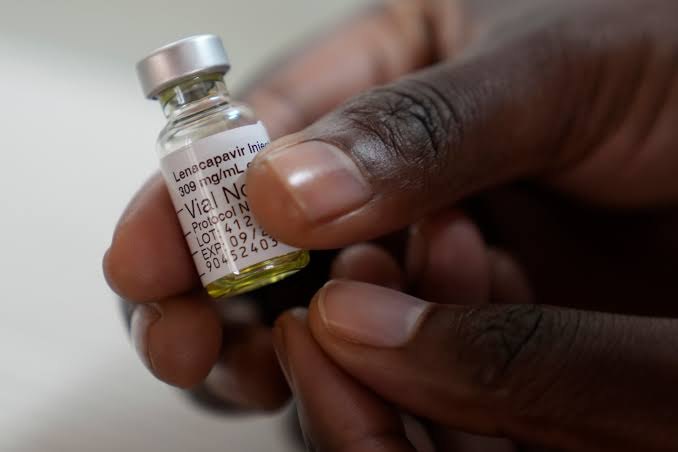
The Lenacapavir Moment
A single injection, twice a year, that protects against HIV. It has arrived in Kenya — and it may be the biggest shift in HIV prevention since the daily pill. Here's what it actually is, and what it means for you.
For decades, preventing HIV meant one of two things: use a condom every time, or take a pill every single day. Both work. But "every single day" is where things quietly fall apart — people forget, run out, travel, or simply get tired of a daily reminder that they are at risk. Now there is a third option that removes the daily part entirely.
It is called lenacapavir, and it is given as an injection just twice a year — once every six months. In that single shot is six months of protection against HIV. The journal Science named it the Breakthrough of the Year, and Kenya has become the first country in East Africa to roll it out to the public.
Lenacapavir at a glance
- What it isA long-acting injectable for HIV prevention (a type of PrEP)
- How oftenOne injection every 6 months — twice a year
- How it's givenA small injection under the skin of the abdomen
- How well it worksUp to 96–100% effective in clinical trials
- Who it's forHIV-negative people aged 12+ and at least 35 kg who are at risk
- In KenyaLaunched 26 Feb 2026; offered free at selected public facilities
What exactly is it?
Lenacapavir belongs to a family of medicines called PrEP — pre-exposure prophylaxis. PrEP is medicine that an HIV-negative person takes before any possible exposure, so that if the virus does enter the body, it cannot take hold. Think of it as a shield you put up in advance, not a treatment you take after the fact.
The PrEP most people know is a daily tablet (such as Truvada). Lenacapavir does the same job — but instead of a pill every day, it is an injection every six months. It was actually first approved back in 2022 to treat people already living with HIV who had drug-resistant infections. Researchers then discovered it could also prevent HIV, and in June 2025 the United States FDA approved it for that purpose. The World Health Organization recommended it a month later.
How does it work?
Most HIV medicines attack the virus at one stage of its life cycle. Lenacapavir is different — it is a capsid inhibitor. The capsid is the protein shell that surrounds HIV's genetic material, like the shell around an egg. The virus needs that shell intact to copy itself and spread.
Lenacapavir grips onto the capsid and jams it — interfering with the virus at several stages at once, so HIV cannot build new copies or move into your cells properly. Because it works at multiple points and stays in the body for months, one dose keeps protective levels of the drug in your blood for a full six months.
How well does it actually work?
This is where lenacapavir earned its "breakthrough" title. In a large trial called PURPOSE 1, which enrolled over 5,000 young women in Uganda and South Africa, there were zero HIV infections among those who received lenacapavir. A second trial, PURPOSE 2, showed near-identical results across a broader group. In real-world use, health officials describe it as up to 96% effective.
Just as important is adherence — whether people actually keep up with it. Over 90% of trial participants came back for their injection on time. Compare that to daily pills, where studies have found that in some groups, real-world protection dropped as low as 26% simply because doses were missed. Removing the daily burden is much of the point.
Who is it for?
Lenacapavir is for people who are HIV-negative and at ongoing risk of getting HIV — and who would benefit from not having to take a daily pill. That includes young people, women, sex workers, and anyone who finds daily medication hard to sustain. Guidelines cover anyone aged 12 and above who weighs at least 35 kg.
Before you can start, there are firm rules
You cannot simply walk in and get the shot. Because giving lenacapavir to someone who already has undetected HIV could breed drug resistance, the process is careful:
You must first take a mandatory HIV test and test negative. You must not have had a possible HIV exposure in the previous 72 hours. And you must tell the health worker about any other medicines you are taking — including TB treatment and even sexual performance drugs — because some of these can interact dangerously with lenacapavir. In practice, the injection is also started together with a short course of oral PrEP to fully cover the initiation period.
What does the injection feel like?
It is a small injection given under the skin of the belly. The most common side effect is a reaction at the injection site — some people get a small firm, tender lump under the skin that settles over time. Other effects such as nausea or headache were uncommon in trials. Overall it is described as well tolerated.
The Kenya rollout
On 26 February 2026, Kenya officially launched lenacapavir at Riruta Health Centre in Nairobi — becoming the first country in East Africa, and one of the first in the world, to offer it. The first Kenyan to receive it was a 27-year-old community health worker from Kawangware who had taken a daily pill for nearly ten years and admitted, "a pill every single day, sometimes you forget."
The numbers behind the launch tell the story. Kenya recorded around 15,000 new HIV infections in 2024 — down dramatically from 110,000 in 2013, but still roughly 40 new infections a day. About 1.4 million Kenyans live with HIV. The country's goal is to push new infections toward zero by 2030, and lenacapavir is a key new tool.
How it's being delivered
The rollout is phased, not everywhere at once. Kenya received an initial 21,000 starter doses through a partnership between the Ministry of Health and the Global Fund. Phase one began in 15 high-burden counties — including Nairobi, Mombasa, Kilifi, Machakos, Kisumu and Homa Bay — across roughly 150–178 selected health facilities, with two further phases planned to reach all 47 counties over time.
Crucially for access, it is being offered free of charge to eligible people at selected public facilities. This matters enormously: in wealthy countries the same drug carries a price tag of around US$28,000 per year. In Kenya, delivered through donor-supported programmes, the estimated cost works out to a small fraction of that — and nothing at the point of care for those who qualify.
Why this moment matters
HIV prevention has never lacked effective tools — it has lacked convenient ones. A pill only works if you take it. A condom only works if you use it, every time. Lenacapavir shifts the equation: two clinic visits a year, six months of protection each, and near-complete effectiveness in the trials. For someone juggling work, stigma, and the quiet exhaustion of a daily reminder, that is a genuinely different proposition.
It is not a cure, not a vaccine, and not a reason to abandon condoms. But it is, by any honest measure, one of the most significant advances in the 40-year fight against HIV — and Kenya is at the front of the queue.